
Microwave ovens have been in our kitchens for decades, yet many people still hesitate to use them. Some believe that microwaves leak dangerous radiation, destroy nutrients, alter the molecular structure of food, or even cause cancer.
But how much of this is supported by science? To answer that question, let’s look at five basic facts.
1. Why do many people avoid using microwaves?
The concern is understandable. Microwave ovens do use radiation, and the word radiation can sound alarming. Rumors are abundant: microwaving changes proteins, destroys nutrients, creates “unnatural” or “radiolytic” compounds, alters the molecular structure of water, makes food radioactive, weakens the immune system, damages the nervous system, and causes cancer.
Much of this fear has been amplified by the internet, where poorly controlled experiments, misunderstandings of basic physics, and repeated anecdotes can eventually take on the appearance of scientific fact.
One influential figure in the modern anti-microwave movement was Hans Ulrich Hertel, a Swiss food scientist. In 1991, Hertel and Bernard Blanc conducted a small study comparing blood measurements in volunteers after they consumed foods prepared by different methods, including microwaving. Hertel interpreted the findings as evidence that microwaves were harmful.
The study attracted considerable attention, and Hertel later became involved in legal battles with Swiss manufacturers and authorities over his public statements. In 1998, the European Court of Human Rights ruled that Switzerland had violated his freedom of expression. Unfortunately, this ruling is sometimes misinterpreted as a validation of Hertel’s study findings. It was not. The ruling concerned freedom of expression, not the scientific validity of his study. Hertel’s findings have not been independently replicated, and even his study partner, Blanc, later distanced himself from the publication, stating that its presentation and interpretation were unwarranted.
2. How does a microwave oven work?
Understanding how microwave ovens work can help clarify common concerns. A microwave oven uses invisible electromagnetic waves — called microwaves, a form of non-ionizing radiation — to transfer energy to food. These waves create a rapidly alternating electric field that flips back and forth billions of times per second.
Water molecules, which are polar (meaning they have a slightly positive end and a slightly negative end), try to twist and turn to line up with this constantly reversing field. This molecular motion generates heat within the food. The heat then spreads through the food by conduction and other forms of heat transfer.
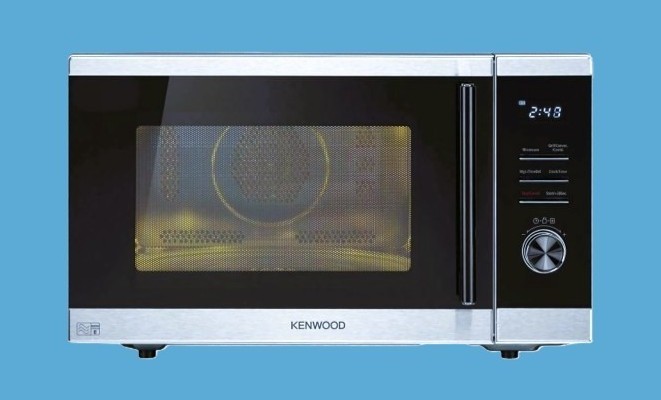
The metal walls of the oven help contain the microwaves, while the mesh in the door allows you to see inside while preventing most microwave energy from escaping. A turntable, or another distribution mechanism in some models, helps heat the food more evenly.
The typical household microwave oven has a power rating of approximately 600 to 1,500 watts and operates at a frequency of 2.45 GHz.
3. Does microwave cooking damage or alter food?
It is important to distinguish between microwave radiation itself and the heat it produces. The microwaves used in household ovens are non-ionizing radiation and do not have enough photon energy to directly ionize atoms or molecules (removing electrons from atoms or molecules). However, microwave heating, like other forms of heating, can change the physical and chemical properties of food.
For example, proteins are folded into complex three-dimensional structures, and heat can cause them to unfold or otherwise change their structure. But this is not unique to microwave cooking. Conventional heating methods such as steaming, boiling, baking, and frying can also do the same.
Similarly, microwave cooking can cause changes in fats, carbohydrates, vitamins, and other components of food. The important question is whether these changes are substantially different from those produced by conventional cooking.
After reviewing published data on the effects of microwave cooking on moisture, protein, carbohydrate, lipid, mineral, and vitamin content, a study published in Critical Reviews in Food Science and Nutrition concluded that “no significant nutritional differences exist between foods prepared by conventional and microwave methods. Any differences reported in the literature are minimal.”
In other words, there is no credible evidence that microwave cooking inherently destroys the nutritional value of food or transforms it into something harmful. As with conventional cooking, however, the nutritional effects depend on the food, temperature, cooking time, and amount of water used.
4. Does a microwave oven leak radiation?
Yes. All microwave ovens can leak a small amount of microwave energy, but properly functioning ovens are designed to keep leakage well below the regulatory safety limit.
The official federal limit set by the FDA for microwave oven leakage is 5 mW/cm2 at a distance of 5 centimeters (about 2 inches) from any surface of the oven.
Most modern, properly functioning household microwave ovens leak far below the maximum legal ceiling — typically emitting between 0.1 to 1 mW/cm2 at the 2-inch testing boundary.
The actual leakage, however, varies by model and condition. The leakage can be much higher if the metal enclosure, door hinges, latches, or seals are damaged.
If you are concerned about leakage, you can use a microwave leakage meter to check the level. Some inexpensive consumer meters available on Amazon are quite good based on reviews and in my personal experience. Although their absolute measurements may not be as accurate as professional ones, you can gauge their accuracy by measuring different microwave ovens at different distances (the radiation level drops off rapidly with distance). Of course, it is better to have professional measurements if you have the budget.
5. Are some microwave ovens safer than others?
They are all within the safety limits set by regulators provided they have no defects. However, not all microwave ovens are made the same. Among the better-performing models, for example, LG service documentation specifies a leakage standard below 1 mW/cm² for certain models, while Panasonic documentation specifies a voluntary limit of 2 mW/cm² for fully assembled ovens. Samsung service documentation for certain models specifies a post-repair criterion of 4 mW/cm².
Therefore, when purchasing a new microwave, you should do some online research to understand its leakage limit and other qualities.
6. The bottom line
A properly functioning microwave oven, used according to the manufacturer’s instructions, is considered safe under current U.S. safety standards. When replacing your microwave oven, consider choosing one with lower leakage. Avoid standing too close to the microwave oven while it is operating. And, for peace of mind, consider measuring its radiation leakage level.





Leave a Reply