
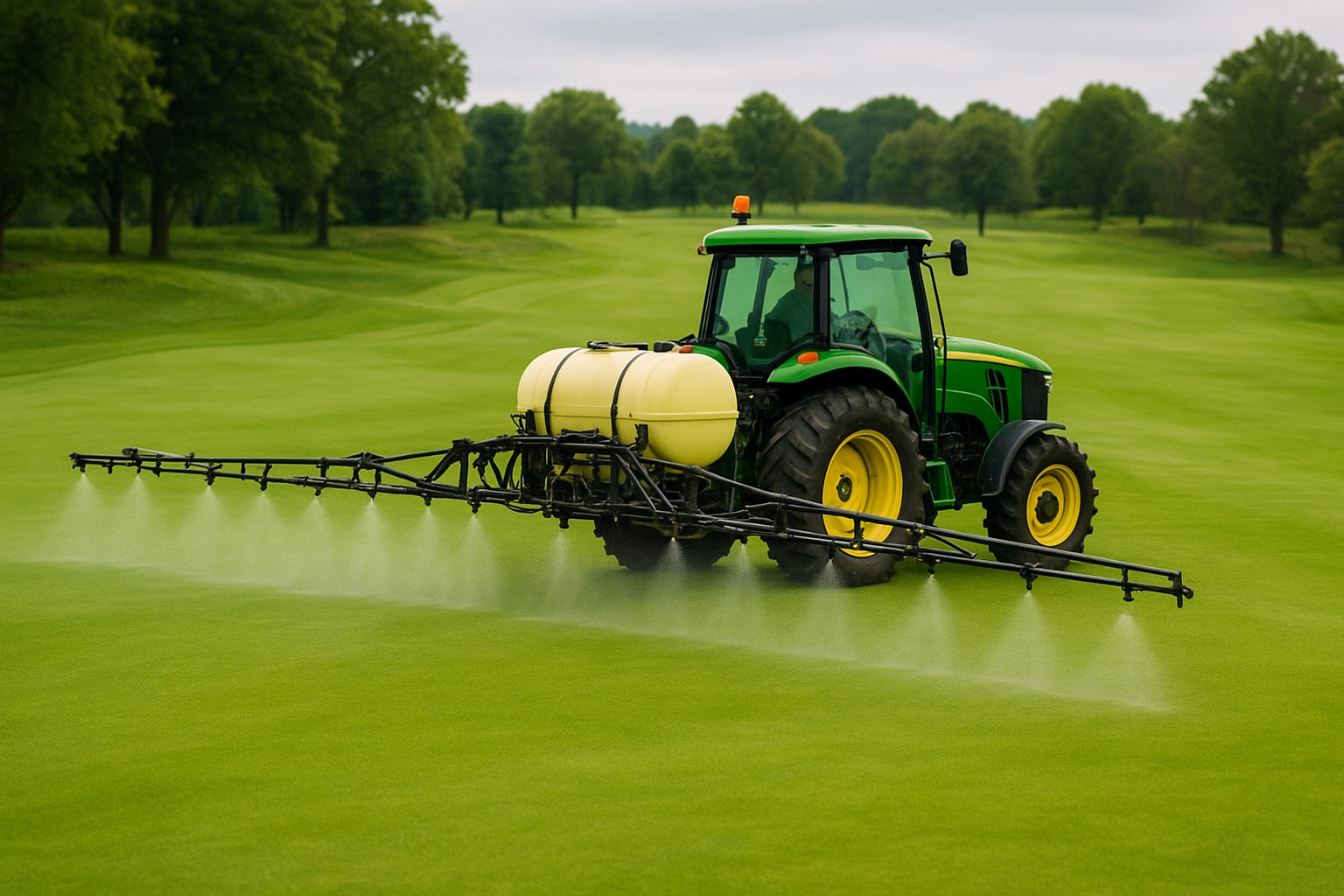
Golf Courses, Pesticides, and Parkinson’s Disease
Did you know that simply living near a golf course could put your health at risk? A new population study analyzing 139 golf courses and nearby residents is making shock waves. The study, published in the May issue of JAMA (Journal of the American Medical Association) Open, found that “living within 1 mile of a golf course was associated with 126% increased odds of developing PD [Parkinson disease] compared with individuals living more than 6 miles away from a golf course.”
The culprit, of course, is pesticides — including weed killers, insecticides, and fungicides. This new study also noted that “pesticide application to golf courses [in the US] can be up to 15 times higher compared with countries in Europe.” In fact, many studies have already linked Parkinson’s disease to pesticide exposure.
Residential Use of Pesticides: A Growing Concern
In many neighborhoods across the country — including my own — pesticide companies are booming. Families have their lawns sprayed almost as frequently as golf courses, all in the name of looking “attractive” and “well-kept.” The result? Even a simple evening walk can hit you with a strong, lingering chemical odor.
Rest assured, Parkinson’s disease is not the only disorder that pesticides can cause. More and more people, including the young, are getting increasingly sick — with rising rates of neurological and mental disorders, cancers, obesity, and diabetes, just to name a few. We have to be far more mindful about pesticide use. Although there’s no reliable report on how much pesticide is used today, one study that cited the EPA’s 1999 report found that “Over 1 billion pounds of pesticides are used in the United State (US) each year and approximately 5.6 billion pounds are used worldwide.” That was 26 years ago.
These toxic chemicals have nowhere to go except to pollute the air and contaminate drinking water.
Other Toxic Chemicals and Chronic Disease
Of course, pesticides are not the only problem. Other toxic chemicals, such as VOCs (volatile organic compounds) emitted from common household products, also contribute to the growing chronic disease crisis.
Some may still doubt that toxic chemicals are the primary driver of chronic disease — but really, what else has changed so dramatically in the last 80 years?
What We Can Do: Protecting Our Families and Communities
For the sake of our children and future generations, can we collectively do something to reduce pesticide use and limit our exposure to these harmful chemicals?
Change doesn’t have to wait for governments or experts — it starts with each of us. Every choice counts: choosing natural lawn care, saying no to routine pesticides, cutting back on synthetic household products such as plastic containers and cleaning supplies, and raising our voices in the community. Small actions add up — and together, we can protect what matters most: our health.






Leave a Reply