
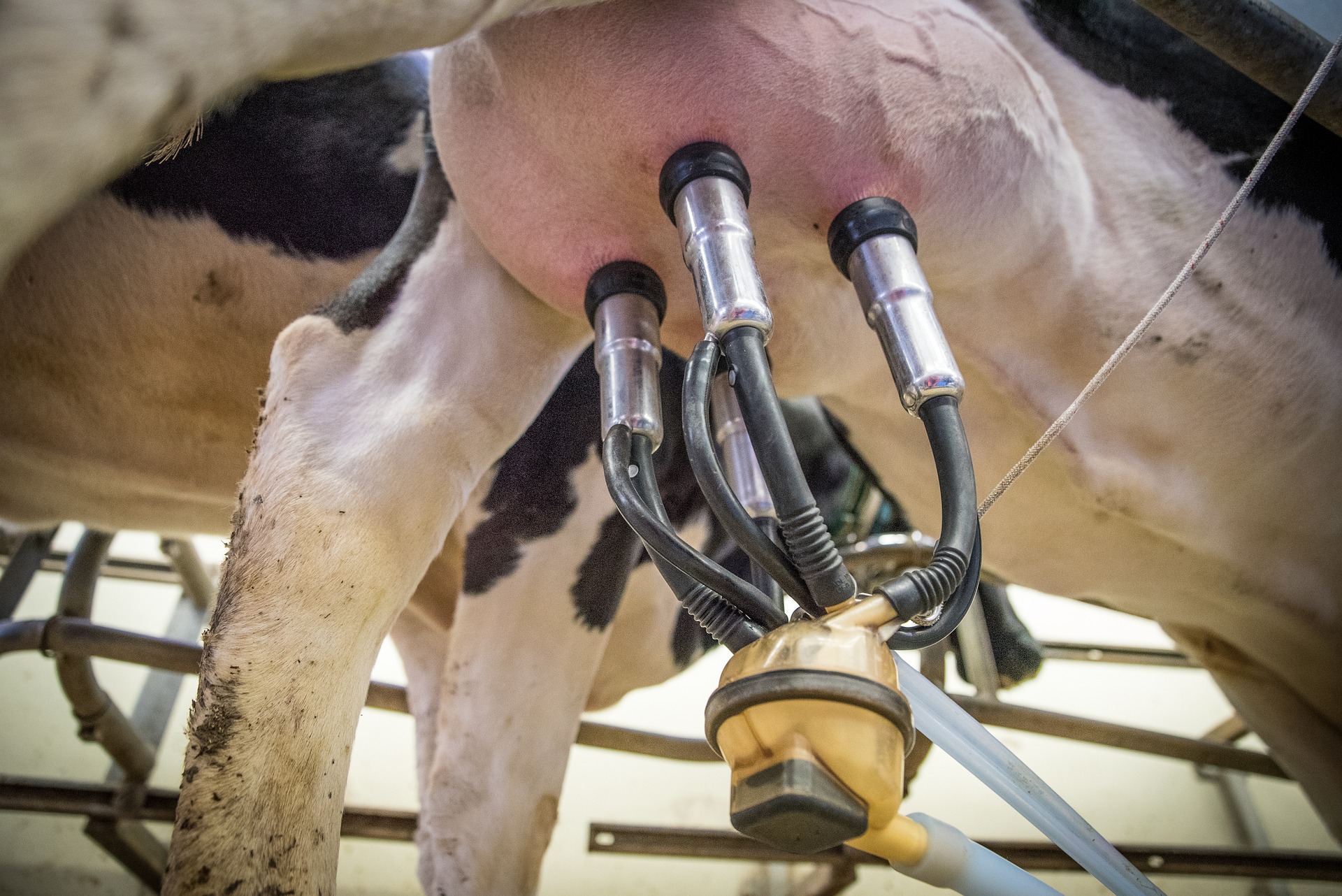
Cow’s milk is not as wholesome as we are told – the health benefits of milk are questionable, and the harm can be real:
- We are told to drink milk to meet the calcium requirement for bone health. But real-life evidence contradicts this dogma – studies have consistently demonstrated drinking milk does not reduce the risk of hip fracture. In fact, many studies show high intake of milk is associated with a high rate of hip fracture.
- Milk is contaminated with pesticides (e.g., insecticides, herbicides, fungicides, rodenticides) from feed.
- To increase milk production, dairy cows in the US are routinely injected with recombinant bovine growth hormone (rBGH, banned in most other countries) and have to be pregnant almost all the time through artificial insemination.
- With the extensive use of rBGH and novel feed additives, a cow nowadays produces 7.7 gallons of milk on average every day all year around, while a normal undrugged cow only produces 1.5 gallons.
- The use of rBGH and constant pregnancy stimulate excessive production of many other hormones such as estrogens and progesterone, which are linked to variety of disorders such as early puberty.
- Consumption of milk produced by cows injected with rBGH raises the level of IGF-1 (Insulin-like Growth Factor 1) in humans, which has been linked to the development of several types of cancer such as prostate, breast, and endometrial cancer.
- Casein, which accounts for about 80% of the protein in milk, has been clearly shown to promote cancer growth in animal models.
- In the US, high milk consumption is found to be associated with high risks of cardiovascular mortality, cancer mortality, and total mortality
- Casein can be further grouped into A1 and A2 beta-casein. Researchers from New Zealand found A1 beta-casein in milk is detrimental to human health albeit more research is needed to confirm the finding.
- From an evolutional perspective, humans only started to consume cow’s milk about 3,000 years ago. And we are the only species who drink another species’ milk as part of daily diet after weaning.
The bottom line: Given, (1) no nutrients in cow’s milk that are not available from other foods, (2) no verifiable benefit for bone health and hip fracture, (3) all the hormones and other pollutants in milk, (4) lactose intolerance and allergy for many, and (5) the potential danger of casein, it does not seem to be worth the risk to drink cow’s milk unless it is A2 and organic.
For a deeper dive, read more here.





Leave a Reply