
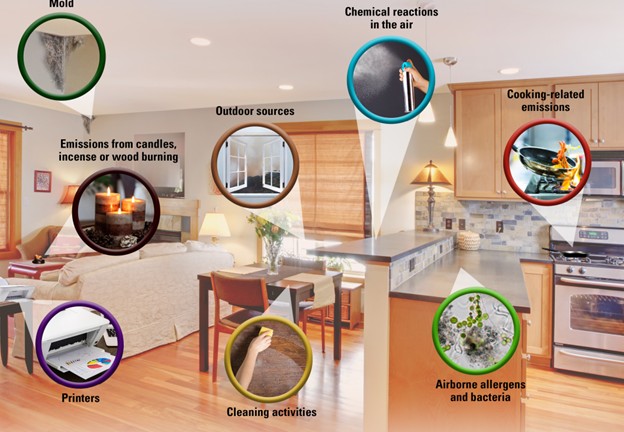
Many of us underestimate the hazards lurking in the air we breathe indoors, where we spend nearly 90% of our time. While emissions of common outdoor pollutants have largely declined since the passage of the 1970 Clean Air Act, indoor air quality has steadily moved in the opposite direction:
- Buildings have become more airtight since the energy crisis of the 1970s.
- The use of synthetic or semi-synthetic building materials has increased.
- Furniture and other household or office products are more often made from synthetic or semi-synthetic materials.
- The use of chemical personal care and cleaning products in homes has grown.
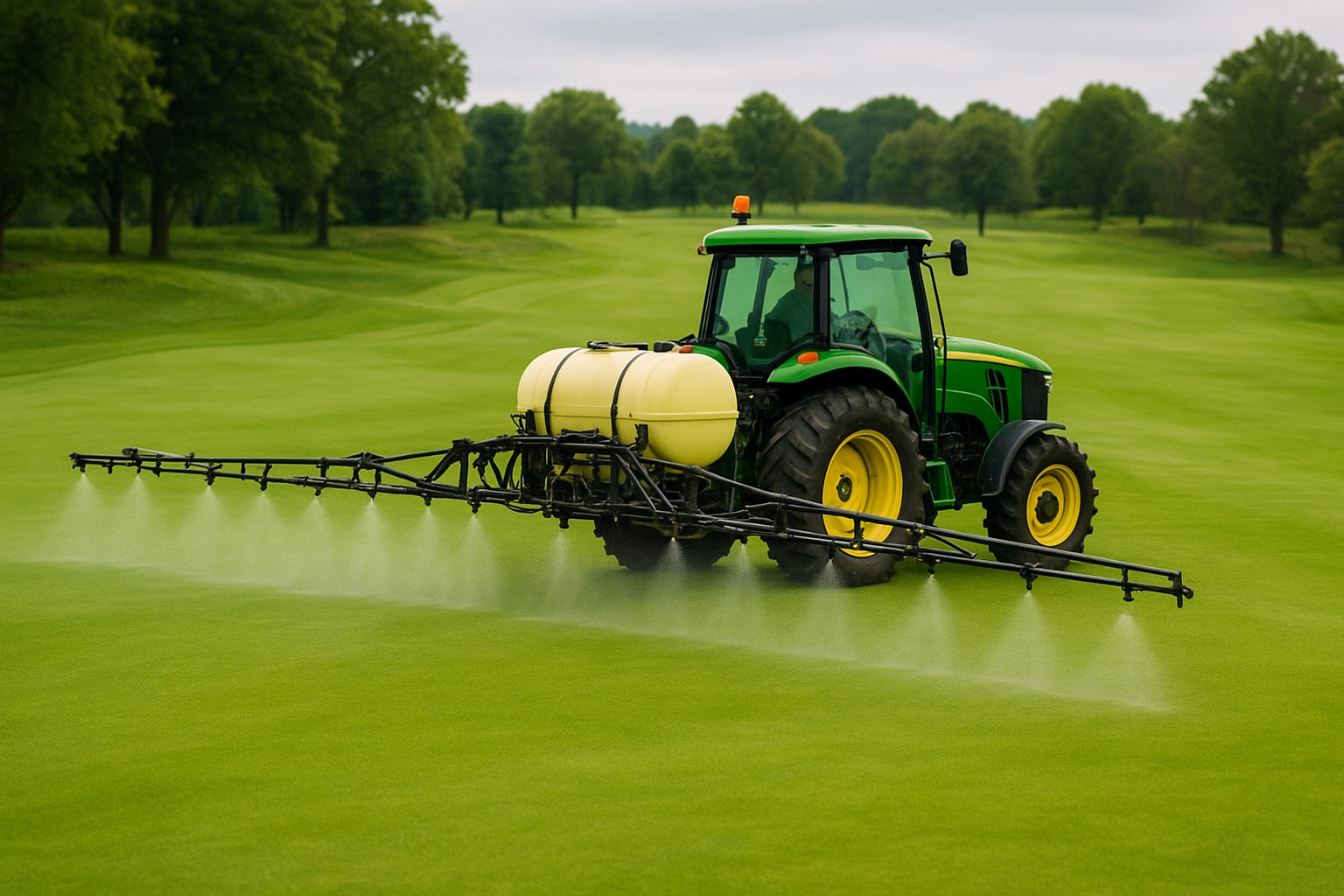
- The widespread application of pesticides, including herbicides, insecticides, fungicides, and rodenticides, on farms, golf courses, and residential lawns contributes to indoor air contamination.
- In recent years, wildfires have also become a major source of poor indoor air quality in many regions across the country.
Although most of us are unaware of it, virtually all synthetic materials emit volatile organic compounds (VOCs) at varying rates, including everyday items such as clothing. For example, formaldehyde — a known carcinogen — is commonly used to prevent wrinkles and mildew in fabrics. A landmark study published in 2023 found that more than 5,000 tons of VOCs were emitted from consumer products in California alone in 2020. Notably, this figure includes only the volatile chemicals regulated under the California Safe Drinking Water and Toxic Enforcement Act (Proposition 65), suggesting that total emissions are likely far higher.
These toxic chemicals or gases in the air also react to form secondary particulate matter, especially PM2.5.
PM2.5 refers to tiny particles just 2.5 micrometers or smaller, about 30 times thinner than a human hair — small enough to penetrate the lungs and enter the bloodstream. Far from harmless dust, PM2.5 carries hundreds of toxic substances, including heavy metals, PAHs, nitrates, sulfates, pollen, bacteria, fungal spores, and even pesticides. These particles disrupt cellular function and increase the risk of long-term health problems such as hypertension, diabetes, weight gain, lung disease, heart disease, stroke, neurodegenerative diseases, and cancer.
Given that we spend about 90% of our time indoors, exposure to indoor air pollutants — toxic gases such as VOCs (volatile organic compounds) and PM2.5 — has increasingly become a threat to our health, compounding the exposure to toxic chemicals we receive through food, water, and skin contact.
Thankfully, there are practical steps we can take to reduce levels of PM2.5 and toxic gases in our homes.
Target the Sources of Pollution
- Before moving into a home (new or old), take time to clean out all toxic chemicals, including unused cleaning products, paints, and pesticides stored in bathrooms, attics, and garages — previous owners typically leave these items behind. Do not discard them in the regular trash. Instead, find collection events or permanent drop-off sites in your area by searching online for “household hazardous waste disposal + your city/state.”
- Whenever possible, replace plastic or synthetic items with products made from natural materials, including food containers, furniture, carpets, padding, and even clothing.
- Choose natural or organic cleaning products.
- Use natural or organic personal care products.
- Replace gas stoves with electric stoves when feasible.
- Don’t overlook the “invisible bugs.” Reduce dust mites through regular cleaning, and prevent mold growth by keeping indoor humidity below 50%.
- Minimize pesticide use in the yard. Lawn pesticides can easily become airborne and migrate indoors.
Today, natural or organic alternatives are available for nearly every household product, even mattresses. Finding them simply requires intention and attention. While these choices may seem costly, nothing is more valuable than health — we cannot afford not to invest in cleaner air and a healthier home.
Filtering Toxicants Out
In addition to managing the sources of PM2.5 and VOCs, we can also take steps to remove these pollutants from the air.
Choose the Proper Furnace Air Filter
To improve indoor air quality, the first step is to look at the furnace air filters currently in use. Choose filters that are more effective in removing particulate matter (PM). Furnace air filter performance is rated using the MERV (Minimum Efficiency Reporting Value) scale. For residential settings, MERV ratings typically range from 1 to 16, with higher numbers indicating greater efficiency at capturing smaller airborne particles:
- MERV 1–4 filters capture mainly large dust and debris and are not rated for smaller particles (so they won’t trap much PM2.5).
- MERV 5–8 filters are effective for larger particles (3–10 µm) but offer limited protection against fine particulate matter such as PM2.5.
- MERV 9–12 filters remove a higher fraction of smaller particles, capturing particles down to about 1 µm, which includes fine dust and some smaller allergens.
- MERV 13–16 filters are the first on the standard MERV scale required to achieve high capture efficiency for particles below 1 µm, making them far more effective at reducing PM2.5, smoke, and many airborne pathogens. For example, MERV 13 filters capture over 50% of particles 0.3–1.0 µm, about 85% of particles 1.0–3.0 µm, and around 90% of particles 3.0–10 µm.
Obviously, a MERV 13 filter or higher is desired for cleaner air. However, not all furnaces can handle the increased airflow resistance of these higher-rated filters. In such cases, or when the furnace is not in use for heating or cooling, portable indoor air cleaners can be very helpful.
Select the Right Portable Indoor Air Cleaners
To reduce particulate matter, especially PM2.5, look for air cleaners equipped with a true HEPA filter. True HEPA filters are certified to remove at least 99.97% of particles as small as 0.3 microns and are the gold standard for PM reduction.
However, these filters do not remove toxic gases such as VOCs, airborne pesticide residues, or combustion byproducts. To capture these pollutants, you need an air cleaner with an activated carbon filter. Be aware, though, that there is no widely accepted performance rating system for portable air cleaners targeting VOCs and other gases. As a general rule, more carbon means greater adsorption of toxic gases, and consulting user reviews — especially detailed or critical ones — can provide helpful insight into real-world performance.
High-end air cleaners can be effective, but their upfront cost and the ongoing expense of replacement filters can add up quickly. A more affordable alternative is a DIY air cleaner made with a 20 × 20 box fan, a high-quality filter, activated carbon fabric, and, of course, duct tape. You can tape the carbon fabric and filter directly to the back of the fan, or assemble four filters into a cube with the fan placed on top (see the demonstration video). Encouragingly, a recent study shows that these DIY units can perform as effectively as commercial models.
Consider Indoor Plants
Studies suggest that certain indoor plants — including snake plant, peace lily, spider plant, golden pothos, and Boston fern — can help reduce indoor air pollutants through phytoremediation. In this process, leaves and roots absorb VOCs like formaldehyde and benzene and metabolize them into less harmful substances.
However, a review shows that their real-world impact appears minimal. While plants can remove pollutants efficiently in controlled laboratory settings (such as NASA’s sealed-chamber studies), their air-cleaning effect in typical homes is negligible. The rate of pollutant removal is simply too low to meaningfully improve indoor air quality — especially compared with mechanical solutions like activated carbon filtration or increased ventilation.
That said, if you enjoy caring for indoor plants, adding a few to your home certainly doesn’t hurt. They provide aesthetic value, may enhance mood and well-being, and contribute to a more pleasant indoor environment — just don’t rely on them as a primary air-purification strategy.
The Bottom Line:
Improving indoor air quality doesn’t require perfection or major expense — just consistent, mindful choices. Small steps, such as reducing synthetic materials, choosing safer personal care and cleaning products, minimizing pesticide use, and using high-quality air filtration, can meaningfully lower your cumulative toxic burden. Over time, these incremental changes add up, creating a healthier home and reducing the risk of chronic disease.


Leave a Reply